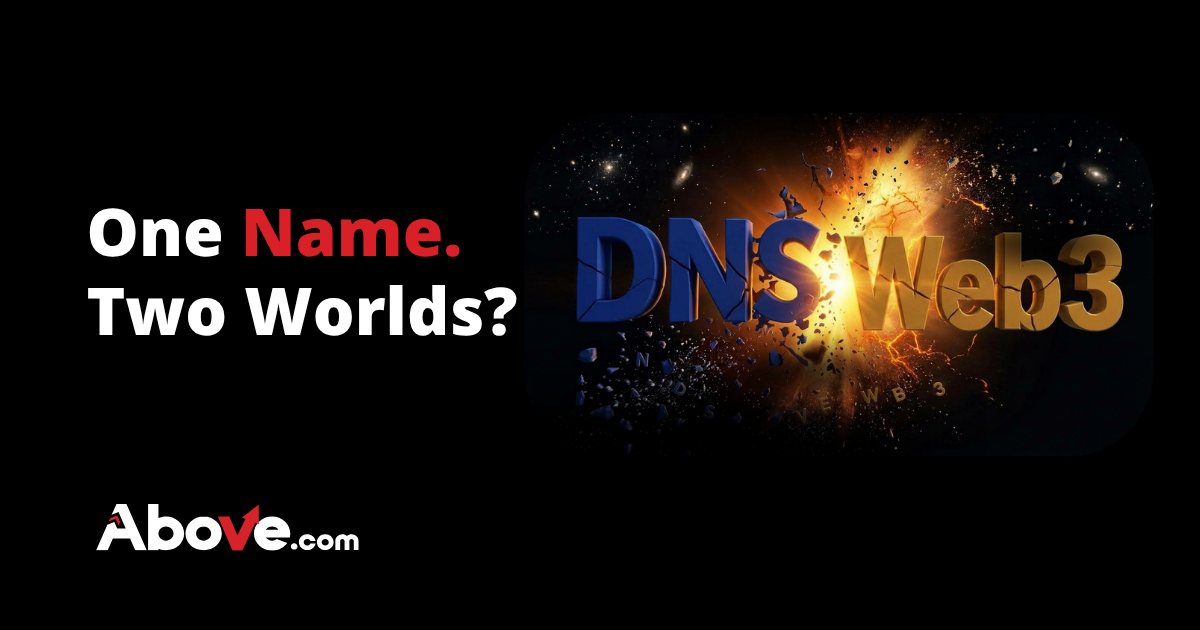
For years, Web3 naming systems have developed alongside, and largely outside, the traditional Domain Name System (DNS). Blockchain-based domains introduced a different approach to access, digital identity, ownership and naming.
Now, those two worlds are colliding!
ICANN’s 2026 New gTLD round closed applications on 12 August 2026, opening the door to another major expansion of the traditional DNS. At the same time, ICANN is considering how traditional gTLDs could integrate with alternative naming systems, including blockchain-based namespaces.
For domain investors, this raises a fascinating question: what happens when the same domain name can exist in two different naming systems?
One Name, Two Worlds?
Traditional domains operate within the global DNS, with registries, registrars and established policies governing how names are registered and resolved.
Web3 naming systems take a different approach. Blockchain domains can be represented as digital assets and may be designed around concepts such as decentralised ownership and control.
The potential problem becomes apparent when the same string exists in both environments.
If a Web3 namespace already uses a domain name and a separate organisation obtains the corresponding DNS TLD, the two systems could potentially contain different versions of the same domain name.
For a consumer, that distinction may be invisible, but for a domain investor, it raises much bigger questions around ownership, identity, brand protection and value.
Why ICANN Is Looking at Integration
ICANN established a Technical Study Group to examine how gTLDs could be integrated with alternative naming systems. Its initial work considers a principle designed to maintain consistency between the DNS and an integrated alternative naming system.
One concept discussed in the current work is effectively that the same string should remain under the control of the same party across the integrated systems. The framework also considers how registration, suspension, transfer, security and other lifecycle events could remain synchronised.
Importantly, this is not yet a final policy. ICANN is currently seeking public feedback on the TSG’s initial report, with the consultation closing on 21 September 2026.
The Ownership Question
This is where the worlds of Web3 and DNS could face their biggest philosophical difference.
Traditional domains operate within a defined policy and enforcement framework. Web3 naming systems like those on Decentraweb can be built around a very different concept of ownership, in which control of a blockchain asset can be tied to a private key rather than to an account held with a conventional registrar.
If an integrated namespace needs to support actions such as suspension or other enforcement measures, how does that work with a system designed around decentralised ownership?
The answer could determine whether certain existing Web3 namespaces can integrate with the DNS without fundamentally changing how they operate.
For existing domain holders, this isn’t merely a technical question. It could affect how their digital assets function, how they interact with the traditional internet, and whether they retain value.
Could Two People Own the Same Domain?
This may ultimately be the most important question for domain investors. If a blockchain namespace and an ICANN TLD operate independently, the same second-level domain could potentially exist in both systems with different owners, creating a form of digital naming collision.
ICANN’s existing 2026 work on name collisions recognises the challenge presented by alternative naming systems with substantial pre-existing registrations. Traditional DNS-based measurements may not capture activity taking place entirely within blockchain or other alternative systems.
Importantly:
- Brands will need to understand where their names exist.
- Domain investors will need to consider whether competing naming systems affect a domain’s scarcity or commercial potential.
- Registries will need to establish how different forms of ownership can coexist without creating confusion.
Not Every Web3 TLD Faces Challenges
It is also important not to treat every Web3 namespace as the same. A new brand-oriented TLD with no existing public registrations has a very different starting point from an established blockchain namespace with a large installed user base.
This distinction could become increasingly important as ICANN evaluates applications and considers how alternative naming systems should interact with the DNS.
The 2026 round already includes specific processes for evaluating new strings, such as name-collision risk and contention when identical or similar strings have multiple applicants.
What Should Domain Investors Watch?
The emerging Web3/DNS convergence could create both risks and opportunities.
For investors, the key isn’t necessarily choosing between Web2 and Web3. It is understanding where users, businesses and brands are actually adopting domains.
New TLDs can create fresh opportunities, particularly where a namespace has strong commercial meaning or an established community, but it is worth remembering the extension alone does not wholly determine the value.
Investors should also consider:
- Who controls the registry?
- How established is the namespace?
- How many genuine users does it have?
- What are the registration and renewal economics?
- What policies govern ownership and disputes?
- Could the string compete with an existing alternative namespace?
- Will consumers understand the difference?
These questions will become increasingly relevant as more naming systems move towards the traditional DNS. For domain investors, this is more about scarcity, ownership, competition and the future value of digital real estate.
The question may no longer be whether Web3 and the DNS will meet, but rather what happens when they do.
Frequently Asked Questions
What is the difference between a traditional DNS domain and a Web3 domain?
Traditional domains operate within the global Domain Name System (DNS) and are registered through accredited registrars under established policies. Web3 domains can use blockchain technology and may represent digital assets controlled through a blockchain wallet or private key. The two systems have different approaches to ownership, management and dispute resolution.
Could the same domain name exist as both a DNS and Web3 domain?
Yes, potentially. If the same name is registered independently in a traditional DNS namespace and a blockchain-based naming system, two different parties could potentially control versions of the same name. This raises questions about naming collisions, brand protection, ownership, and the commercial value of each domain.
What should domain investors watch as Web3 and DNS converge?
Investors should monitor how ICANN’s work on alternative naming systems develops, particularly around ownership, name collisions, integration and dispute policies. It is also worth considering the strength of individual namespaces, genuine user adoption, registration and renewal costs, commercial demand and whether consumers understand the difference between traditional and Web3 domains.